The nation is today celebrating the birth anniversary of a great lady who dedicated her life for the freedom of the country and nation building. Born on February 2, 1889, to the royal family of Kapurthala, Rajkumari Amrit Kaur, the Princess of Kapurthala, had her early education in Sherborne School for Girls in Dorset, England, and her college education at Oxford University. She was raised a Christian. She had a landed property, “Manorville “in Summerhill, Simla (Shimla).
SECRETARY OF MAHATMA GANDHI FOR SIXTEEN YEARS
She joined Mahatma Gandhi’s Ashram in 1934 and served as his Secretary for 16 years. For her participation in Indian freedom movements, Kaur was imprisoned by the British on multiple occasions. During the Salt Satyagraha, she was arrested for her involvement from Bombay. In 1937, she went to jail again – this time on charges of sedition. Kaur returned to jail in 1942 for taking part in the Quit India movement. The brutal lathi charge she went through during the process took a toll on her health. Eventually, she was released from jail and put under house arrest in her residence, Manorville, Summer Hill, Simla.
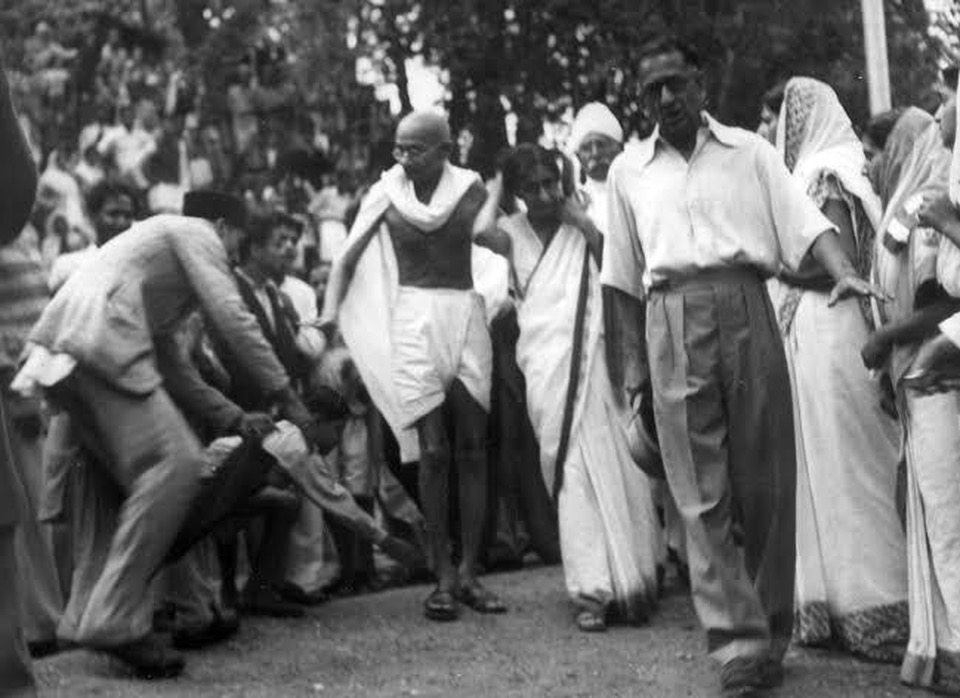
AMRIT KAUR INAUGURATED LADIES PARK AT SIMLA IN 1937
Rajkumari Amrit Kaur was actively associated with social work in Simla town to help the vulnerable sections of the society. She inaugurated the Municipal Park for Women and Children on July 6, 1937, and the All India Women’s Conference Centre (AIWC). The Ladies Park was later named Rani Jhansi Park, and a statue of Rani Jhansi was also installed on August 10, 2010. The then Government sidelined the “Princess of Simla” who worked tirelessly for the general progress and welfare of women and children of Simla town while naming the park.
ALL INDIA WOMEN’S CONFERENCE BRANCH OPENED AT SIMLA
On the inauguration of the Ladies Park, the All India Women Conference, Simla branch was also opened. The historical building is still situated in the park. This centre helped local women and girls to avail coaching in stitching and knitting, helping them become independent in life. The centre is still working with the same vision as it was opened in 1937. AIWC was founded in 1927 by Margaret Cousins as an organisation dedicated to women and children awareness and empowerment. Rajkumari Amrit Kaur was a co-founder of the AIWC, became its secretary in 1930, and president in 1933. Fatima Ismail and Manmohini Sahgal were other women who served as the secretary of the Simla branch in 1936 and 1945, respectively.
RAJINDERA PRASAD VISITED LADIES PARK
In September 1951, Dr. Rajendra Prasad, President of India, visited the Adult Literacy Centre opened in AIWC Simla and attended the Labour Show at the Ladies Park.
FIRST WOMAN CABINET MINISTER OF INDEPENDENT INDIA
When India finally won independence from British rule in 1947, Kaur became the first woman to join Nehru’s Cabinet, serving as Health Minister for 10 years. In that position, she founded the Indian Council for Child Welfare in 1952; helped establish the country’s top institution – All India Institute of Medical Sciences, New Delhi; and campaigned to prevent malaria, likely saving hundreds of thousands of lives. Awarded an honorary degree from Princeton in 1956, Kaur was praised for offering “substantial and highly effective programs of action” to mothers and children, to the sick and starving. Kaur became the First President of AIIMS at the age of 67, a position she held from 1957 till her demise in 1964.
POLITICAL CAREER
She was elected to the Constituent Assembly (1946-1950) from the Central Provinces and Berar. In India’s first general elections, she won the Lok Sabha (1952-1957) seat from the Mandi-Mahasu constituency in Himachal Pradesh. After her tenure in the Lok Sabha, she served as a Member of Parliament in the upper house (1957-1964) representing Himachal Pradesh until her death.
MANORVILLE GIFT TO AIIMS
Rajkumari Amrit Kaur chaired her last Governing Body meeting of AIIMS on August 14, 1963. The Governing Body accepted her gift of “Manorville”, her residential building at Summer Hill, Shimla, to to for the Institute for the rest and relaxation of doctors and nurses of AIIMS. A truly unparalleled gesture in the history of the Institute.
Her house, Manorville, was a focal point of freedom struggle consultations. Mahatma Gandhi, during his visits to Simla, stayed at Manorville in 1939, 1940, and 1945. Gandhi’s longest stay at Manorville was during the Simla Conference from June 24 to July 16, 1945. The room number six in Manorville where Gandhiji stayed has been preserved as “Bapu Ka Kamra. “
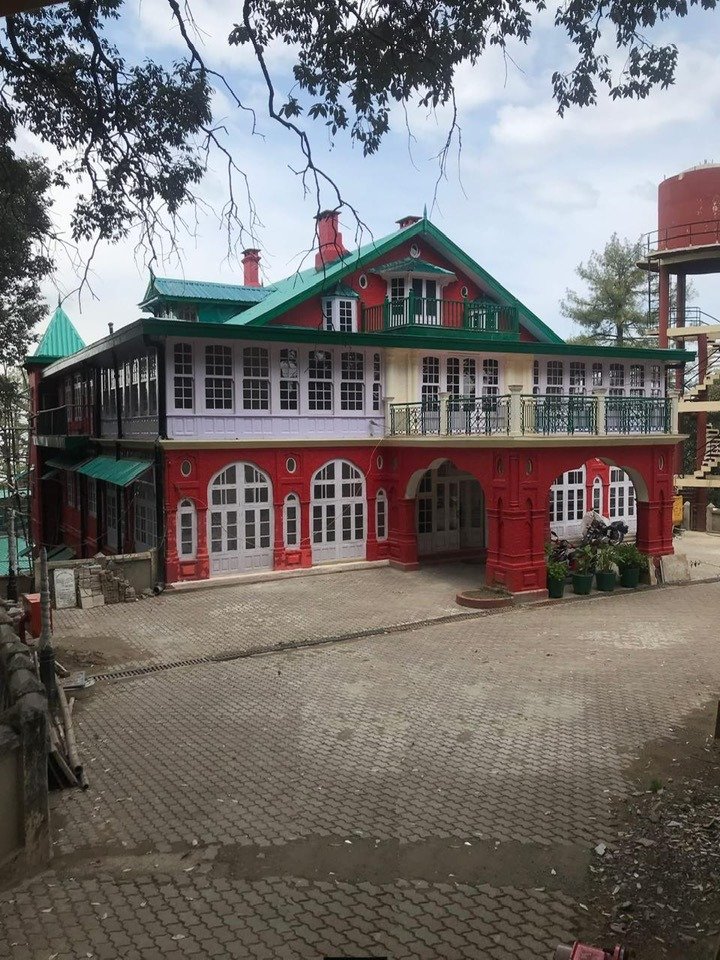
FORGOTTEN PRINCESS OF SIMLA
In leaving her life of luxury, Kaur not only helped build lasting democratic institutions but also inspired generations to fight for the marginalized. The people of Simla, especially the mobile centric younger generation, are not aware that the Princess of Kapurthala who was permanent resident of Simla had done yeoman service in the field by of cleanliness, khadi popularization, women and children empowerment, and literacy besides propagating the message of Gandhiji to the people of the hill States. She was also instrumental in organizing a meeting of leaders of Himalayan States People’s Conference viz. Kahan Singh Sahota, Bhaskara Nand, and Sita Ram with Mahatma Gandhi after the “Dhami Goli Kand” on July 27, 1939 at New Delhi.
It is very sad that no place or landmark in Shimla is dedicated to the name of Raj Kumari Amrit Kaur, whereas persons who had no connection and contribution towards the Simla society have had statues and institutions named after them by successive governments. Only a board was installed at the entrance of Manorville Manson by the Department of Art, Language, and Culture, Himachal Pradesh, which shows our lacklaster approach towards the forgotten “Princess” of the “Queen of Hills.”
She eventually donated this historic building, made of bricks and stone, to the All India Institute of Medical Sciences, not for it to be a monument, but for the service of humanity. Her selfless act continues to inspire generations.
Vinod Bhardwaj
Honouring the Past. Illuminating the Present.