People proudly say, “I live in Cemetery.”
The Sanjauli Cemetery in Shimla – once part of the princely estate of Koti and leased to the Imperial British Government in 1920 – is now neglected and in a pathetic state. The decay reflects poorly on local authorities, the Church and the Tourism Department. Until the 1990s the area had only two or three dwellings, and residents feared venturing there after sunset. Over the past four decades, people bought land around the cemetery, and a new locality spread from the cemetery to Sanjauli Tunnel and below the Dhalli–Shoghi bypass toward Bhattakuffer. Today, match-box buildings crowd the hill, and locals casually call the neighbourhood “Cemetery” – “I live in Cemetery” (भाई जी मैं cemetery, में रहता हूँ, मेरे घर आना). That area, adjoining suburban Sanjauli, is now larger than central Shimla.
First burial, 1921
The bishop of Lahore dedicated the cemetery on 29 July 1921, though the first burial – Joseph Multani, an Indian Christian – had already taken place on 12 May 1921. About 600 graves lie on 36 bighas, with sections for different Christian denominations and two World War I soldiers’ graves. Sanjauli is the only Shimla cemetery still in use by local Christians and holds many prominent citizens. (Shimla has three other cemeteries: at Kanlog, a nuns’ cemetery near St Bede’s College in Navbahar, and the oldest near the chief minister’s residence at Oakover. In the 19th century there was also one at Peterhoff and another below the old bus stand near the Directorate of Education.)
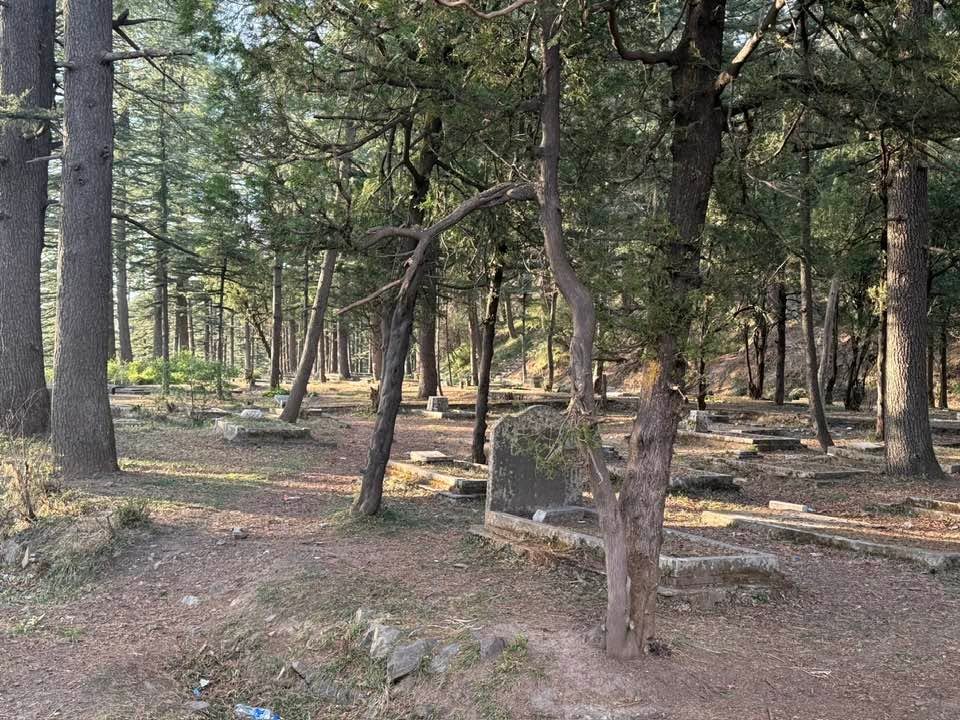
Recently, I visited with my friend Krishan Negi and felt ashamed by what we saw: a broken boundary wall, a narrow path and a crumbling guardhouse. Tombstones are toppled or stolen, bushes overgrow the plot, and many monuments lie buried under fallen trees, stones, moss, grass and mud. Empty liquor bottles, chip packets and cigarette packs litter the graves – a spot now used by courting couples and as a cricket ground for youths.
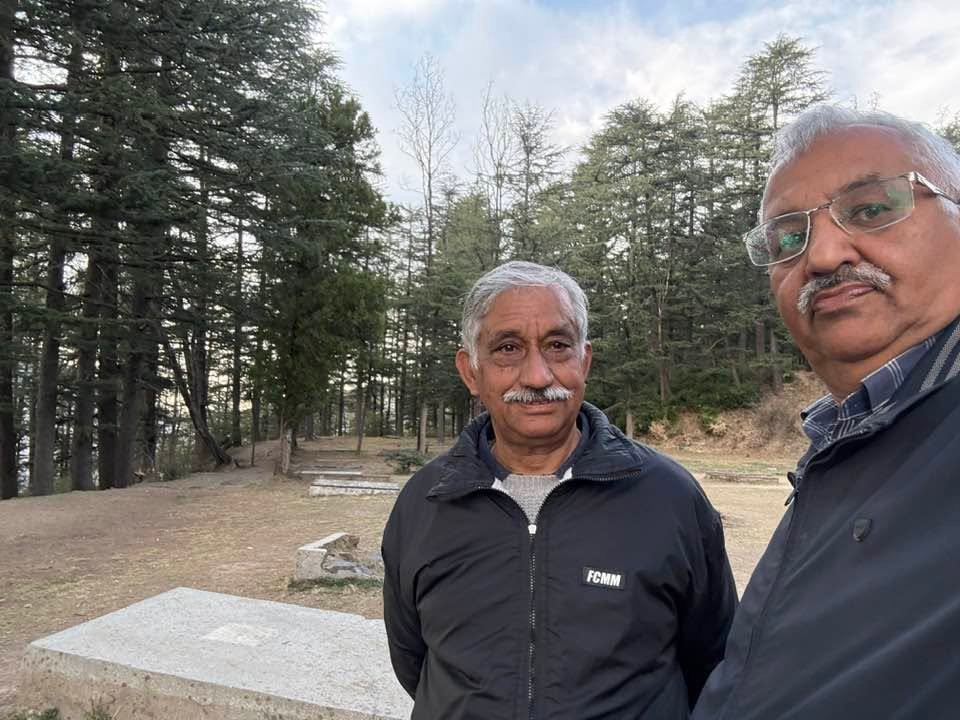
Crosses and marble statues lie shattered, hard to match to their graves; locals say marble and iron railings have been stolen. Reading the epitaphs with difficulty, we saw that prominent British and Indian figures who helped build Shimla and adjoining areas rest here.
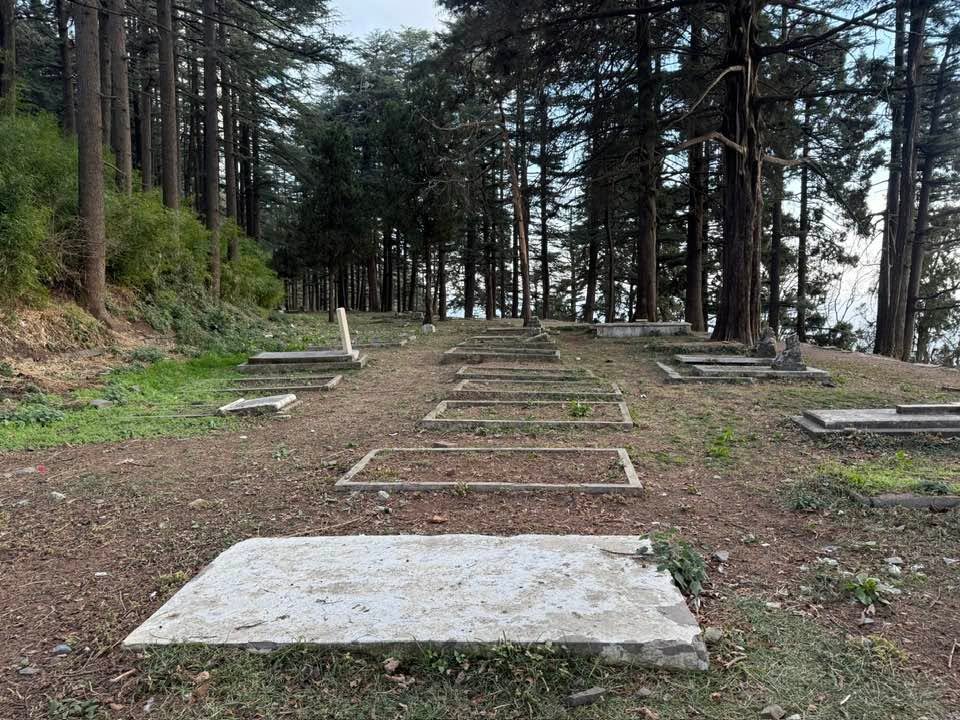
We believe the site should be restored and declared a heritage place – a future walk for visitors from Britain, Ireland and beyond. The people buried here are not “Resting in Peace”; intruders have shattered the dignity and calm. Once a peaceful site surrounded by cedar, yew and cypress, it now has dying trees, no new plantings, and even monkeys and stray dogs roaming among the graves – testimony to official neglect. The Church should take up the matter with higher authorities to restore its honour.
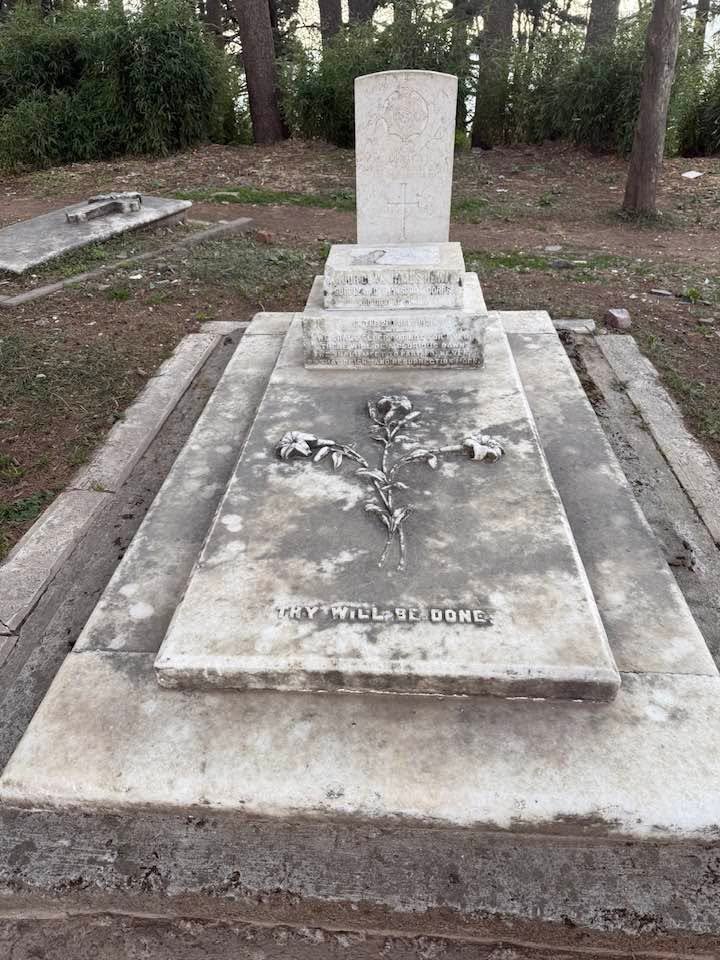
With firm belief, we both feel that the spirits at Sanjauli Cemetery must be uneasy amid the disregard of the living.
Vinod Bhardwaj
Honouring the Past. Illuminating the Present.