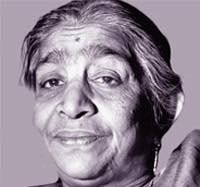
The nation is remembering the great legendary personality of the country, Sarojini Naidu, born on February 13, 1879, in Hyderabad. She was a political activist, feminist, celebrated poet, and playwright. She joined politics, advocating for women’s rights, education, and Hindu-Muslim unity. She was the first Indian woman to be president of the Indian National Congress in 1925. She participated in the Non-Cooperation Movement, Salt March, and Quit India Movement. She served as a member of the Constituent Assembly. After Independence, she was appointed Governor of United Provinces (Uttar Pradesh) from 1947-1949. She was called “the Nightingale of India” by the Father of the Nation, Mahatma Gandhi.
POLITICAL CAREER
She was also a close associate of Mahatma Gandhi and accompanied him to London for the second Round Table Conference for Indian-British cooperation (1931). Gandhi ji started his journey to London from Simla, and she joined him at Bombay (now Mumbai).
PAHARI GANDHI & SAROJINI NAIDU
Baba Kanshi Ram, the man who was called Bulbul-i-Pahar (Nightingale of the mountains) by Sarojini Naidu and the title of Pahari Gandhi (Gandhi of the mountains) by Jawaharlal Nehru, was given to him at a rally in Hoshiarpur in 1937.
Baba Kanshi Ram was popularly known as Siyahposh Jarnail (General wearing black clothes). The death sentence handed out to Bhagat Singh , Rajguru and Sukhdev in 1931 had a great impact upon him. He vowed to wear black clothes until India achieved its independence. He was jailed 11 times between 1920 and 1942 but remains unknown in the popular imagination among Indians outside Himachal Pradesh.
In 1927, at a Political Conference organised by the Congress Committee at Daulatpur Chowk in tehsil Una (now district), the audience refused to listen to other speakers when Sarojini Naidu was also present. He had to be called upon to speak, and his melodious and sonorous voice, the music of his fluent speech, earned him the title Bulbul-e-Pahar (Nightingale of the mountains).
Smt. Indira Gandhi, the then Prime Minister, released an Album of commemorative stamps on Baba Kanshi Ram. She presented an Album to Shri Swaya Ram, son of Baba Kanshi Ram, at Jwalamukhi in Kangra district of Himachal Pradesh on 23 April 1984 (see photo). Prof. Narain Chand Parashar, M.P. and renowned writer, wrote a comprehensive book on Baba Kanshi Ram’s life and contribution to the freedom struggle.
SIMLA CONFERENCE -1945
Sarojini Naidu was a strong advocate of Hindu-Muslim unity and had a strong political bonding with Jinnah; she was against the partition of India. She wrote a book titled “Mohamed Ali Jinnah – An Ambassador of Unity – His Speeches & Writings 1912-1917 “with a biographical appreciation. Sarojini Naidu and Kamla Devi Chattopadhyay, during the Shimla Conference in July 1945, held negotiations between Muslim League and leaders (see photo) to avoid partition.
Kamala Devi Chattopadhyay was a legendary Indian social reformer, freedom fighter, and the driving force behind the renaissance of Indian handicrafts, handlooms, and theatre in post-independence India. Known as the “culture queen of India” and Hatkargha Maa (Mother of Handlooms), she also played a pivotal role in empowering women and preserving indigenous arts.
LITERARY LIFE
Sarojini Naidu also led an active literary life and attracted notable Indian intellectuals to her famous home in Bombay (now Mumbai). Her first volume of poetry, The Golden Threshold (1905), was followed by The Bird of Time (1912), and in 1914 she was elected a fellow of the Royal Society of Literature. Her collected poems, all of which she wrote in English, have been published under the titles The Sceptred Flute (1928) and The Feather of the Dawn (1961). Naidu’s poetry reflected her love for her country and her people, as well as her political views and involvement in the Indian independence movement.
She dedicated her life to India’s independence, women’s rights, and social reform. Her writings continue to inspire and motivate people across the country.
Vinod Bhardwaj
Honouring the Past. Illuminating the Present.