Prof. S. Radhakrishnan the then President of India ( 1962-1967) inaugurated Indian Institute of Advanced Study (IIAS)on October 20,1965 at Simla (later Shimla). In his inaugural address, Dr. Radhakrishnan emphasised the importance of questioning established truths and not being prisoners of the status quo.
The Viceregal Lodge , built between 1880 and 1888 for Lord Duffrin served as summer residence of the British Viceroy from 1888 to 1947. After Independence Government of India inherited two very different viceregal homes in Simla Hills Viceregal Lodge ie Rashtrapati Niwas at Observatory Hill and the Retreat at Mashobra. Before 1888 Peterhoff was the residence of Viceroy. The Viceroy Lodge came to be associated with many an important events which changed the history and geography of the sub-continent. As early as 1900, the Punjab Alienation of Land Act was passed in the Governor General’s Council in the Viceregal Lodge.
In 1906, deputation of Indian Muslim leaders led by Aga Khan met the Viceroy Lord Minto in Simla on 1st October. A Tea Garden Party was organised in the garden of Viceregal Lodge to demand separate electorate for Muslims which sowed the seeds of partition between. Subsequently on 30 December 1906 at Dhaka motion was moved by Muslim representatives to form the first Muslim League Party in India ie All India Muslim League. Here at Simla,Lord Chelmsford and his officials formulated policies, including the constitutional reforms known as the Mountagu- Chelmsford Reforms Report (1918 ). In 1931 second settlement was signed here between Gandhi and Lord Willingdon which helped to implement Gandhi- Irwin Pact. Gandhi decided to attend Second Round Table Conference at London.
With the prospect of independence in 1940, the Viceregal Lodge came to be associated with the hectic political leaders of India, like Mahatma Gandhi, Jawaharlal Nehru, Maulana Abul Kalam Azad, Sardar Vallabh Bhai Patel, Abdul Ghaffar Khan, Muhammad Ali Jinnah and Master Tara Singh took part in deliberations.
Gandhi visited Simla ten times for discussions with Viceroy on the matter of independence of India. Gandhi ji visited for the first time to the Viceregal Lodge in 1921. His last visit was in 1946.
Mahatma Gandhi viewed Shimla as a place of stark inequality, often describing its “insulated heights” as disconnected from the harsh realities of ordinary Indians living in the plains of India. While acknowledging its natural beauty and importance for political negotiations, he despised the reliance on hand-pulled rickshaws, calling them an “insult to humanity,” and felt the British administration ran from a “500th floor” away from planes.
The Viceregal Lodge has played a significant role in India’s history, hosting important events which paved the way for Independence and partition of India. Today, it stands as a testament to India’s colonial past and its journey towards independence.
GIFT TO THE ACADEMIC COMMUNITY
Viceregal Lodge at summer capital of the imperial masters of India was of little use to the President of a democratic republic who visited it only for a few days in the year. A world renowned teacher , philosopher and academician Prof. S. Radhakrishnan thought of putting it to academic use. Dr Radhakrishnan gave proposal to the then Nehru Government and after due consultation in the Cabinet transferred it to the Ministry of Education to be handed over to the Indian Institute of Advanced Study.
A colonial era gigantic edifice is a gift of President Prof. S. Radhakrishnan and Prime Minister Pt. Jawaharlal Nehru to the academic community of the country.
DR. PARMAR SUGGESTION ON VICEREGAL LODGE*
The people of Himachal are indebted to founder of Himachal Pradesh , first Chief Miniter of Himachal Dr. Yashwant Singh Parmar for giving the State a separate identity, shape and status. His visionary approach helped the State to achieve many milestones in his tenure. He gave utmost priority to road construction, horticulture development, education,health,power generation, afforestation, industrial development and above all preservation of rich history and culture of the State.
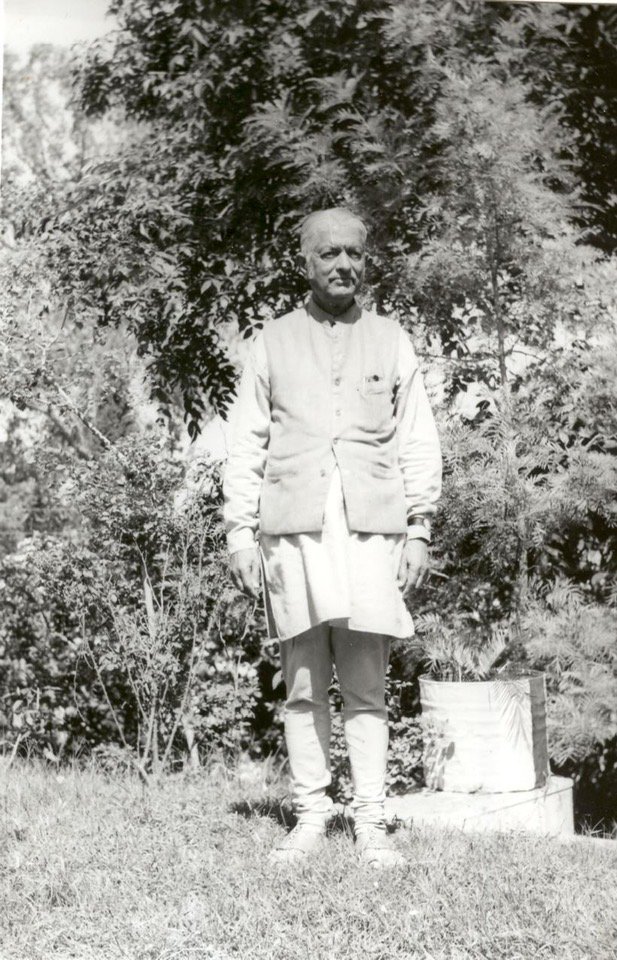
On June 22,1962 Dr. Parmar wrote to then Prime Minister Pt. Jawaharlal Nehru regarding the use of Rashtrapati Niwas at Simla.
He suggested,” I am glad the matter of the use of the Rashtrapati Niwas Simla, for the Himachal Pradesh. Medical College and State Hospital will receive your due consideration at the proper time ( PMO, File No. 45 (21)/6270-PMS, Sr. No8-A).
Pt. Nehru replied on June 23,1962.
“I am afraid I do not agree with you about the use of Rashtrapati Niwas in Simla. I entirely agree with the President’s suggestion that it should be used for a public purpose. There is absolutely no point in keeping a huge building like this vacant merely to maintain some supposed dignity of the President.
What it will be used for we have not decided. We shall consider that in the course of next few weeks. Personally I am inclined to use it for children or for government employees of the lower grades. However, your suggestion will also be borne in mind”.
Nehru also suggested to use it as library but ultimately the premises was converted in to an Indian Institute of Advanced Study.
Himachal first Medical College was opened in Simla in 1966 in the residence of British Commander in Chief Official Residence known as Snowdon. With the passage of time the place became insufficient to house many more departments and cater to the needs of the increasing population. Presently three branches of IGMC, Shimla are running in the town- Snowdon, Lady Reading and Super Specialties Branch-at Chamyana. If Dr. Parmar suggestion of converting the Viceregal Lodge to Medical College and Hospital was accepted in 1962 the situation faced today by patients would not arise.
Viceregal Lodge premises having about 300 bighas of land and well connected definitely be properly used for the suffering humanity.
Dr. Yashwant Singh Parmar’s suggestion to convert the Viceregal Lodge, now the Indian Institute of Advanced Study (IIAS), into a medical college was a sincere and open proposal, considering the state’s needs at its initial stage of development. However, it wasn’t accepted by Pt. Nehru cabinet.
Source : The Nehru Archives.
Vinod Bhardwaj
Honouring the Past. Illuminating the Present.